The Bear With Us Rehabilitation and Release by Mike McIntosh
Humans and human activity often cause pain and suffering to wild bears. This does not mean there is not some of the same in a bears natural world. However, people inflict the most pain, suffering and mortality. Keep in mind very few wild bears actually die of old age. The vast majority are injured or die due to human activities, hunting being a major cause of bear mortality.
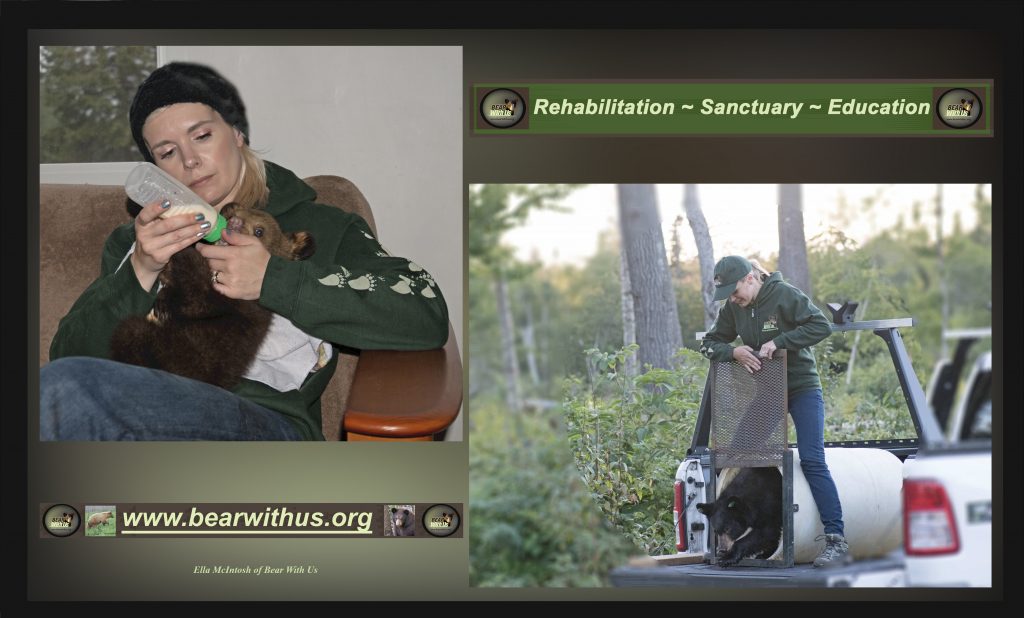
Time and effort to rehabilitate bears young and old that have been orphaned or caused injury at the hands of people has great importance. Helping the individual animal is rewarding. More important is the message to people in general. We as humans can learn to coexist with less damage to our environment and the wildlife that inhabits the environment with us. Education, awareness and understanding bear behavior can reduce fear of the animal and increase appreciation and awe. Wildlife rehabilitation and education is important as the practice helps increase public awareness and hopefully will encourage people to alter habits and thought processes, therefore reducing the need for rehabilitation.
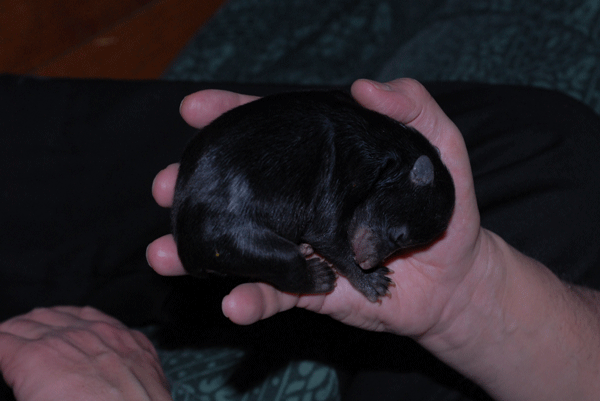
As a wildlife rehabilitator of bears, a success would be a rehabilitated orphaned cub that is returned to the wild at the age of 18 months and survives in the wild to the age of reproducing on its own (4 to 7 years).
Video – Preparing Orphans for Eventual Freedom
Death by Re Feeding Syndrome – Mike McIntosh
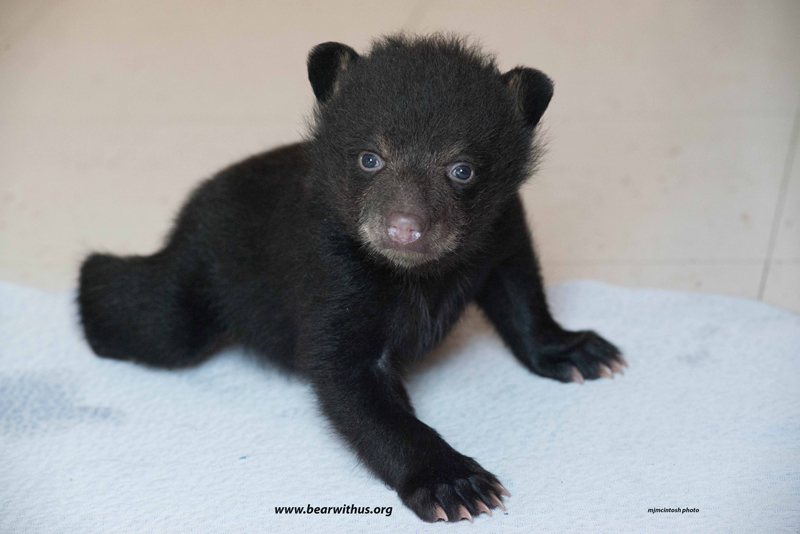
Starving bear cubs, like starving people can die if fed too much of the wrong foods when rescued. A starving orphan cub will often show up at a person’s bird feeder in the winter, or get offered lots of food by the well meaning caring individuals. Sometimes the bear cub has gone away and not come back. Many presume the cub ate enough to go back to sleep, but as an experienced bear cub rehabilitator, I fear that is not likely. Why? …
Starving people died by the thousands after they were offered food again at the WW-1’s end. A condition known as “re feeding syndrome” is a killer. Starting to eat again after a period of prolonged starvation can precipitate cardiac failure. In starvation the production of insulin is decreased in response to a reduced intake of carbohydrates. Instead fat and protein are burned to produce energy. This results in a cellular loss of electrolytes. When you start to eat again a sudden shift from fat to carbohydrate metabolism happens and production of insulin increases, which can lead to profound hypophosphatemia. This can occur within four days of starting to eat again. This can cause heart problems, or other dangerous conditions. Starving patients can be treated, but this must be done cautiously to avoid refeeding syndrome. Rest and warmth must be provided and maintained. Small sips of water mixed with glucose should be given in regular intervals. Fruit juices can also be given. Later, food can be given gradually in small quantities. The quantity of food can be increased over time. … At Bear With Us we have lost a few cubs due to this condition. When a cub dies it is most likely destined to die before we get it because the condition has began to take effect on the poor little bear before we catch it, then the cub dies a few days after arrival. We are very careful when we have cubs arrive.

Facts that we consider when caring for adult bears and bear cubs.– Mike McIntosh
-Very intelligent mammal
-Extremely acute sense of smell. Scent oriented mammal.
-Good eyesight, similar to humans, bears see colour
-Cubs stay with mother for minimum 1.5 years
-Cubs learn by following mother, mimicking her actions and activities ie: food sourcing
-Cubs don’t imprint like some birds, but can quickly learn to trust their caregiver.
-Food and security is important to bear cubs. They get both from mother.
-Caregiver must be careful to wean young cubs from looking to caregiver for protection.
-Cubs are social, multiple cubs together are better than a lone cub in an enclosure
-General human activity must be minimal
-Bear cubs seeing many different people (public) is the bears death sentence later
-Bear cubs returning to the wild cannot get used to people in general or human activity
-Bears have excellent memories.
-Cubs need to be offered wild foods indigenous to area of release.
-Feeding habits are learned – worth repeating, important to remember.
-Cubs should learn what is available in wild, not learn what is available from people and their dwellings
-Release to wild is at about 18 months and when wild food supply is abundant.
-Bear cubs age at admission does not change release time unless affected by injury
-Bear cubs should fear people when released for the bears long term survival.
-Bears have different personalities. Some are less fearful or nervous than others. Be aware of behavioral differences when working with bears.
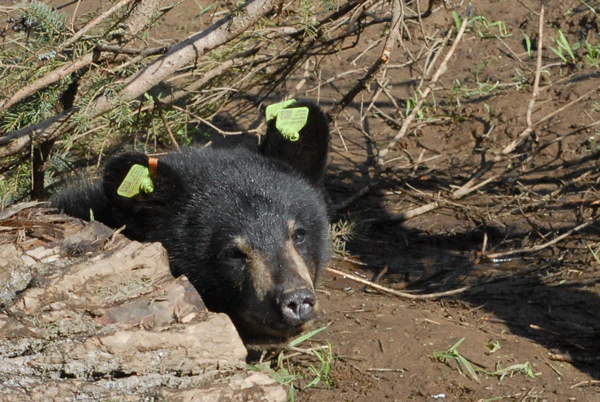
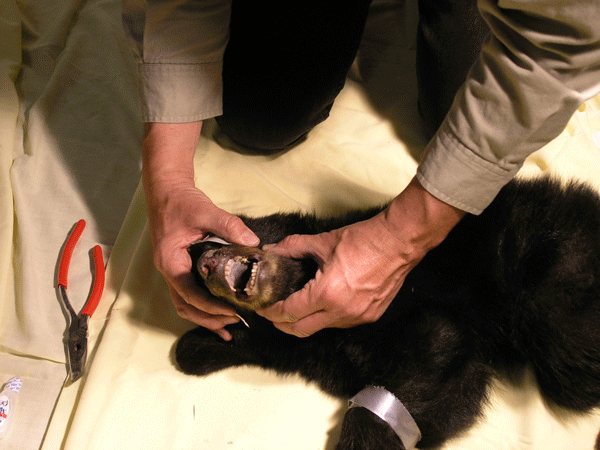
-Ear tagging bears is a must if animal has been sedated.
-Consider the bear regarding pain, stress, fear. Not your fear, the bears!
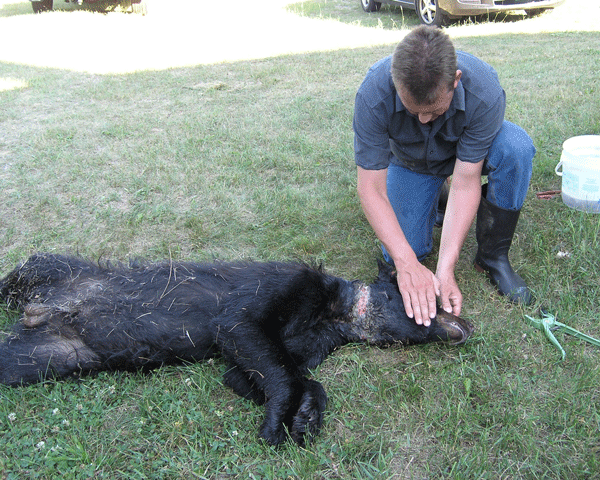
-Injured adult bears are possible to work with. Caution, Precaution and an understanding of bear behavior is crucial. Be careful. Bears may hurt people trying to escape or self defense.
-Remember, the bear has no way of knowing you are not trying to kill or hurt it. Move slowly, quietly and speak in low easy tones. Shouting and loud laughter is not appropriate.
-Bears are extremely powerful and can be dangerous. We are always cautious and considerate.
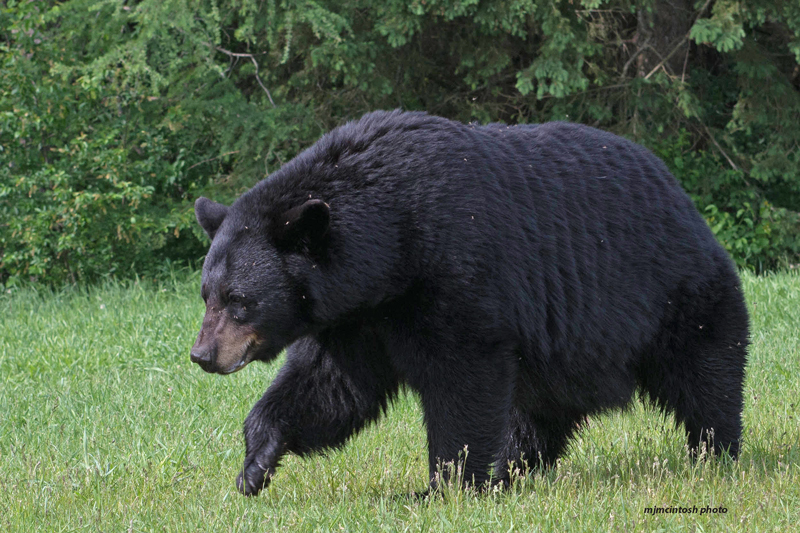
-I have worked with approximately two hundred and fifty adult wild black bears whether treating injuries or live trapping to resolve human/bear conflicts (rehab. bears excluded). I carry a camera nothing else when releasing the bears back to the wild. Not one bear has attempted to injure me. Bears just wish to get away from me. I have taken many pictures of bears fast fleeing butts. … Mike McIntosh
Video – Wild Freedom Begins Now
Orphaned Bear Cub Post Release Research Data
20 collared yearling bears from the Bear With Us Centre for Bears are included in the data cited by the Beecham study. Thank you Mathew Binks of Laurentian Univ. – Sudbury, Ontario.
Bear rehab cub survival and conflict – Beecham
Rehab Study, B Kilham, NH.Short-term fate of rehabilitated orphan black bears released in N